HJ Feature
GREY’S the word
You may have doubts around grey blending, but not only is it the colour service everyone is talking about, it’s also great for attracting AND retaining clients. Here’s why…

ANDREW SMITH
FERGAL DOYLE
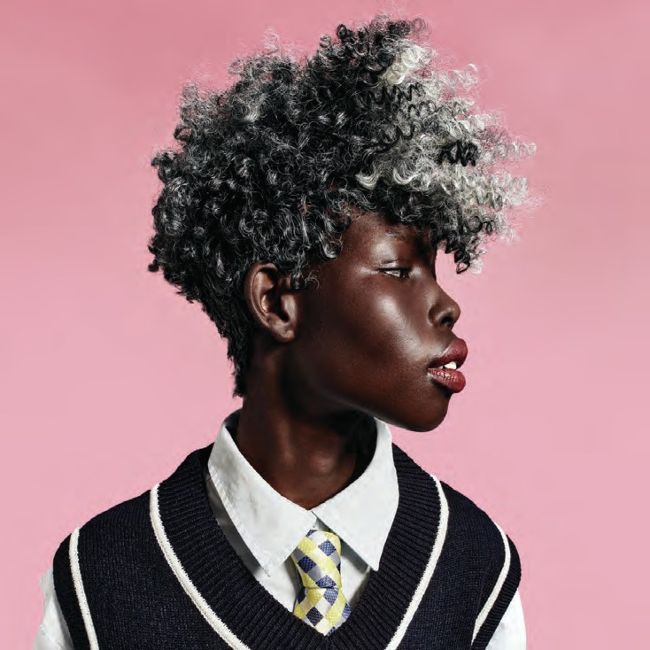
While we’re no strangers to the occasional “I’m going grey!”, and “I need my grey roots covering asap!”, it’s actually grey blending that is the colour service on everyone’s lips right now as more and more clients start to welcome their greys rather than shy away from them. Take our February issue digital poll for example – we asked our Instagram followers if they’ve seen an increase in clients embracing their greys, and a whopping 86% answered yes. But what is grey blending? Why have clients had a shift in mindset when it comes to grey hair? And how can you use grey blending to grow your business? We chatted with some colour experts to get their take on why clients are saying yes to going grey.
For Nancy Stripe, when it comes to colour and how we look at coverage, grey blending is the greatest shift in mindset that she’s seen in her 25 year hairdressing career. “It gives people permission to not only live with grey hair but celebrate it and build colouring techniques around it,” she tells us. “Clients want freedom from the grey bar and body positivity about what they have naturally.” But what is it about this service that is gaining popularity amongst clients? Anneliese Hesse, Humankind Hair, gives three reasons: “One, people are standing up against longstanding misogynistic views that grey hair on women is ugly and uncool. Two, grey blending makes hair colouring a choice again, rather than feeling like a necessity or a chore. And three, it’s attracting a whole new clientele who previously dyed their hair at home or stopped visiting the salon due to money and time constraints.”
In fact, Rosie Baylis found that her clients often dislike the harsh line of demarcation rather than the greys themselves. “Around 90% of my enquiries come from women who aren’t ready to go fully grey yet, but want their greys ‘blurred’, creating a soft, lip gloss-like effect,” she says.
SARAH BOWER
Trust the Technique
When it comes to technique, whether it’s grey blending or tonal blending, at the end of the day, it’s really about the client that’s sitting in front of you. “There are so many ways when it comes to grey blending,” Jack Howard says, “it really depends on what’s happening in front of me.” Likewise, Nancy explains: “There is no one way as all grey patterns are different. The number one stipulation at my salon is consultation and getting to the core of how much coverage your client wants, and what the end goal is.” For Holly Bullock, NXT Ambassador, fine highlights and lowlights are a technique she likes to use, to mimic the growth pattern. “Some clients like to opt for a tip out or money piece added in to add a more ‘current’ feel to their colour,” she adds. Meanwhile, Anneliese’s favourite technique is the most dramatic – the Grey Reset.
“THIS IS A TECHNIQUE THAT REMOVES SOLID COLOUR FROM THE HAIR AND RESTORES THE APPEARANCE OF THEIR NATURAL GREY OR SILVER,”
she says. “This can be really fun to do as it’s one of those that gets a lot worse before it gets better, so you buckle up and board the emotional rollercoaster with your client for the day!”
Consultation is Key
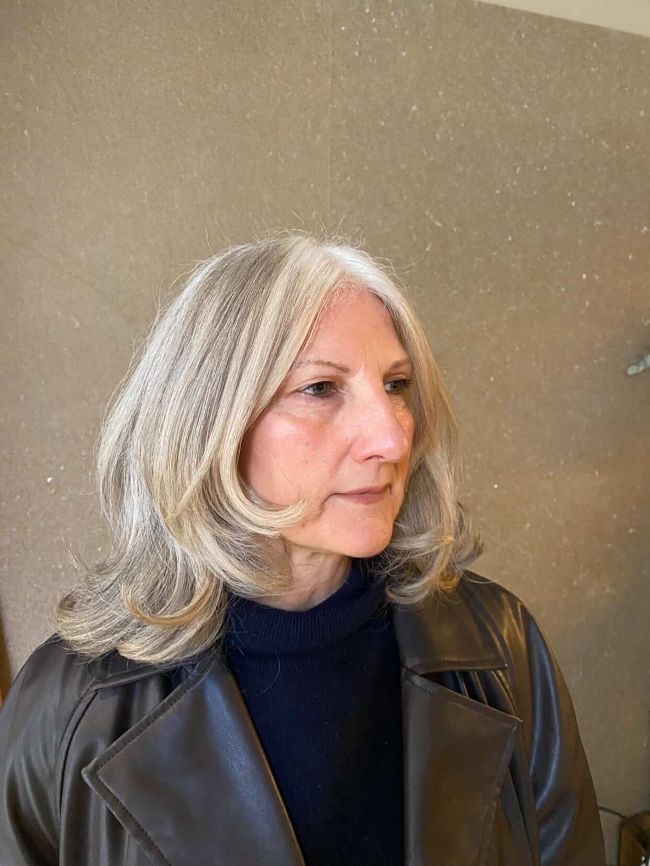
But we also know, in order to determine the best technique, it all comes down to the consultation. For Rosie, colour analysis is essential. “Not all clients will suit going grey in the same way, so it’s important to create a result that suits the client, not just blends the grey. This has transformed how I approach every consultation.” Communication though, is also important. “I’ll ask them how they feel about their natural hair colour,” says Sarah Bower, Grey Blending and Colour Specialist at Larry King. “This is a good way of deciding what the approach is going to be. Then I ask if they identify as blonde or brunette and if they’re happy to change direction if needed, for a better blend.”
For Jack, it’s about the emotional connection. “How does somebody feel about their colour, what do they want to look like, what’s their time commitment, what does grey blending mean to them? Then we can set the goal of where we’re starting to where we finish,” he tells us. And of course, managing expectations.
“One grey transformation will not last a client forever – there will be fade and they will need to understand what the upkeep is,” Nancy explains. “Also, explaining to your clients that grey blending doesn’t have to just be ash or a goodbye to colour – you can live somewhere in between and still enjoy seasonal colour but from a lower maintenance point.”
Back to Business
You may have reservations about maintaining clients if you choose to add grey blending onto your service menu, especially in the current economic climate. But it’s not about eliminating clients from the salon, it’s about listening to demand. Anneliese tells us: “A common concern I hear when teaching Grey Blending Specialist, is the fear of losing colour clients but in my experience, this hasn’t been the case at all. By providing them with a solution, they’ll be even more loyal to you, and will sing your praises to others. Plus, by offering grey blending services, you’re attracting new clients – both the DIY home-dyers, and clients who stopped visiting due to costs and timing.” Sarah agrees: “There’s a high demand for specialists so marketing yourself as one will gain clients. They want someone they can trust in and understand the process.”
For Holly, it’s all about the service. “Grey blending is a luxurious service and it must be priced accordingly. Showcasing this type of work will attract a clientele that is committed to their hair journey and will come back for refresh and touch-up sessions when needed,” she says. “It is also something that takes a high skill level and can really show your potential as a colourist.” Likewise, Nancy shares: “Grey blending is pivotal for modern salons. It’s the number one requested service from new clients at Stripe and it’s because it’s so undervalued in salons and they’re not prioritising this service.” Take Rosie for example: “Learning how to offer this long-term solution to clients has been a game changer and it’s allowed me to change my business structure completely,” she shares. “I’ve only offered grey blending transformations for nearly three years now, and I’ve increased my business net profit by 100x. It positions you as a specialist and allows you to charge premium pricing for transformation-based services rather than time-based appointments.”
At the end of the day, it’s about transitioning clients from that unsustainable regrowth, all while keeping them coming back to the salon. “It’s a really exciting time for our industry and another key moment where things have switched,” Jack shares. “We have to address the needs of the market rather than continuing our old ways.”

SOPHIE LENTON & JONATHAN TURNER

EVO