Top of Their Game
HJ’s Business Director of the Year 2026, Samantha Cusick sat down with current British Hairdresser of the Year 2025, Efi Davies for a joint interview with HJ
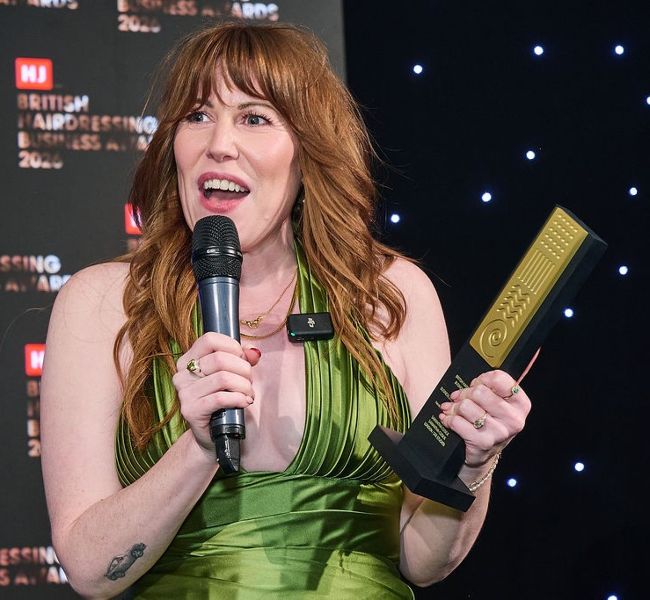
SAMANTHA CUSICK
Efi interviews Samantha...
Have you felt pressure to fit a certain mould?
Completely. I felt like I had to choose between being liked and respected. I’ve been told I’m “too much” and not enough in the same breath. It’s taught me that the mould doesn’t exist, so there’s no point trying to fit into it. My leadership is rooted in being myself. I’m direct when I need to be and I care about my team.
What are some tough decisions you’ve had to make?
Letting go of things that no longer aligned. It’s uncomfortable to step away from something that feels “safe.” Another big one was building Stā Studios and backing the freelance model. At the time, it wasn’t the obvious route, but I believed in it. Those decisions have allowed me to build something that feels future-facing rather than just following what’s already been done.
Does the industry separate creatives and business leaders?
Yes, and I think it holds people back. There’s this narrative that you’re either the creative or the business brain. For me, the way you build a brand, market yourself, create experiences, that’s all creative thinking. I’m very open about the numbers side of my business, but I talk about it in a way that feels accessible. Understanding your finances gives you more freedom.
What role has mentorship played in shaping the way you run your business?
I didn’t have a traditional mentor. I had to figure a lot out for myself, which gave me resilience but also made me realise how valuable guidance is. Now I try to be that for others, whether that’s through my team, my platform or even just conversations. I’m very open with what I’ve learned, including the mistakes, because I think that’s where the real growth happens.
Was there a time when you felt like a leader?
Opening my first salon was a shift, but building multiple spaces and teams really made me step into leadership properly. It stops being about what you can do with your own hands and becomes about what you can create for other people. That’s when it really clicked.
What legacy do you hope to leave?
I want women to see that this industry can be whatever they want it to be. That you can be creative, commercial, visible, successful, and still do it your way. And importantly, that it’s not a boys’ club. There is space for women to lead, to build serious businesses and to be taken seriously while doing it.
What advice would you give a female stylist?
Start small and stay curious. The business side can feel intimidating but it’s just a set of skills like anything else. The more you understand your numbers, the more control you have over your career. Don’t wait until you feel ready, because you never will. Back yourself early and figure it out as you go. That’s how most of us have done it!
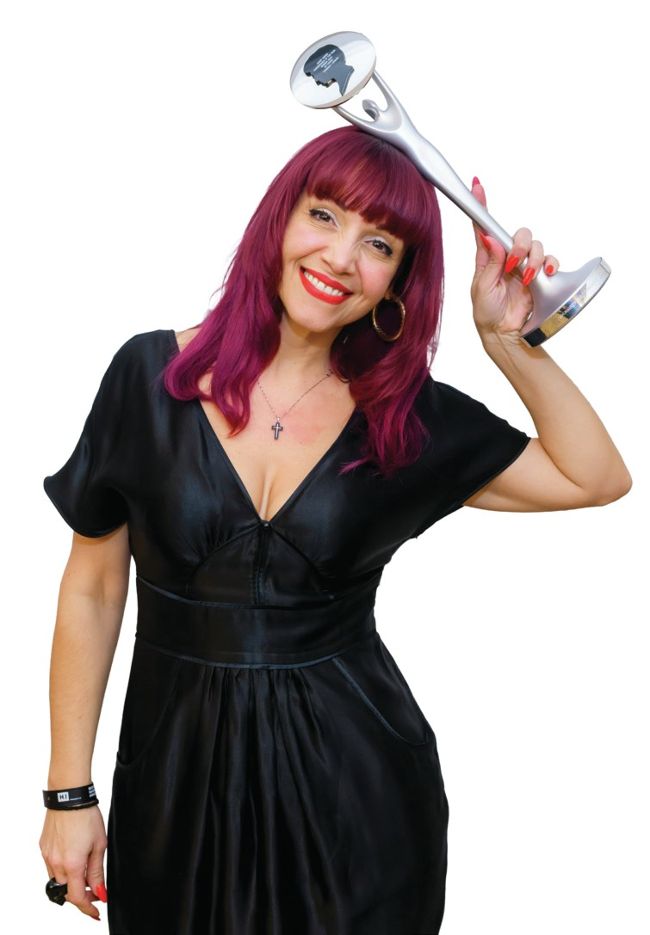
EFI DAVIES
Samatha interviews Efi...
This is the first time in the awards’ history that two females have won British Hairdresser and Business Director of the Year. What does that mean to you?
How incredible, two women in the same year at the very top of the most prestigious awards in British hairdressing. It’s truly historic! Of course, there’s a responsibility that comes with it, because representation only means something if it opens a door for the next woman coming up behind you. When a young apprentice or stylist sees two women winning the biggest awards in the industry, their goals and dreams become a reality and something that they can aspire to. However, we owe so much to the women who were trailblazers who also made their mark, proving that female hairdressers can always win and lead, and now it’s our job to hold the door wide open for the next generation.
Looking back, were there moments you felt that being a woman shaped how people perceived your work?
The great thing about this industry is its diversity. There are opportunities for everyone, whether it’s being creative, running a business, being an educator or working for a product company. I have been very lucky to have been surrounded by incredible women throughout my career, and of course, working with Sacha Mascolo-Tarbuck, who has always encouraged women to be themselves, push through perceived boundaries and be the best you can be. I refuse to accept that certain kinds of work were somehow better suited to male hairdressers. We have to allow our work to speak for itself. Every collection, every shoot, every client is evidence of our skills, talent and expertise.
How do you balance artistic freedom with the practical side of representing a global brand?
When you’re working for yourself, there is freedom in your creativity; the only vision it has to align with is your own. Working and representing a global brand is a privilege, and you have to consider the brand’s values, its positioning, its relationship with hairdressers all over the world; you have to take all of this into account. Working with a brand means you have to stay true to your own creative instincts while incorporating the brand’s vision. It’s the difference between working alone and working as part of a team. You have to adapt, be versatile and contribute to a wider vision. Ultimately, the best brand relationships are built on trust, and when that trust is there, the balance feels less like compromise and more like a collaboration.
Have you seen attitudes towards female leadership change?
When I look at where the industry was 20, even 15 years ago, and where it is now, there has been a real shift. More women in creative director roles, more female salon owners building serious businesses, more women on competition stages and awards shortlists. The landscape looks different, and that matters. Of course, there’s still work to be done, but it’s truly an industry that embraces everyone. We can celebrate the women who’ve broken through while being completely honest about the fact that, despite this being a female-dominated industry, the number of women at the top is less than men.
Unconscious bias is real, and we all have to look at who is put forward for jobs, who is celebrated and profiled, who is given opportunities and who is representing our industry.
What responsibility do you think we have as leaders to shape the future?
I believe that leadership without accountability to the next generation is just ego. We have to pay back and make sure the next generation is better than us – in their skills, creative knowledge and business acumen. The next generation is watching what we do – how we share our knowledge, the platforms we speak on, the people we promote. We owe it to them to be real about the struggles we faced and the challenges we overcame, for them to learn from us and make things better.
When young female stylists look at you now, what do you hope they see, and what message would you want them to take?
I hope they see that there isn’t just one path they can take to be successful, and the achievements, mistakes, and highlights all make you the hairdresser you become. Everyone’s journey will look completely different, and it should. The worst thing a young stylist could do is try to replicate someone else’s journey rather than create their own. I hope they see someone who stayed curious, because curiosity is what sustains a long career. The willingness to keep asking questions, keep looking outside the industry for inspiration, keep being genuinely moved by hair as a creative medium, even after decades of working with it. The day you stop being curious is the day your work starts to become stale, and nobody wants that. Do the hard work even when nobody’s watching, especially when nobody’s watching! Then, when you get to a place where you have influence, use it for someone else, not just yourself.