HJ VOICENOTES
George Waterfield, co-founder of The Secret Garden, Leicester, explains why gender-neutral pricing is one of the simplest and most impactful ways salons can become more inclusive
“YOU CAN SAY YOU’RE A WELCOMING SPACE FOR ALL, BUT IF YOUR MENU STILL FORCES SOMEONE TO CHOOSE BETWEEN ‘MEN’S’ OR ‘WOMEN’S’ SERVICES, THAT CAN BE A HUGE BARRIER."
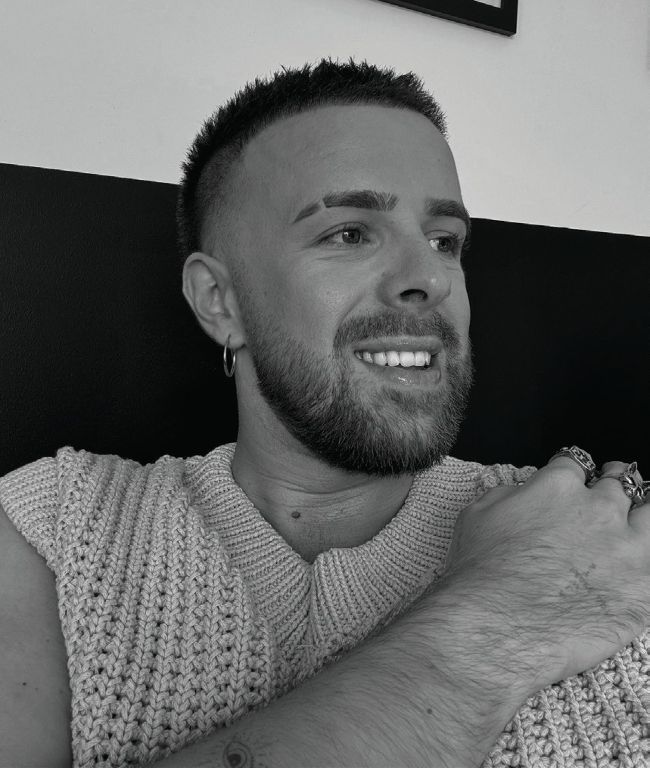
GEORGE WATERFIELD
The hairdressing industry celebrates creativity and individuality, yet many salons continue to structure their service menus around one outdated distinction: gender. As co-founder of The Secret Garden in Leicester, I’ve always found that contradiction difficult to ignore.
When we opened our salon in 2019, our goal was to create a creative, community-focused space. As our client base grew, so did our awareness of how traditional salon structures could unintentionally exclude people.
The first shift came when we sponsored Leicester Pride and started flying the LGBTQ+ flag outside the salon. It was a visible sign that we were a safe and welcoming space, but it also prompted a bigger question: did our day-to-day operations truly reflect that message?
That led us to review everything from pricing and booking systems to the language we use with clients. While many salons describe themselves as inclusive, gendered pricing can quietly undermine that claim. Asking someone to choose between a men’s or women’s service simply to book a haircut can create an unnecessary barrier.
In a culture where more people identify outside traditional gender norms, pricing services according to gender feels increasingly outdated. Hair is hair. Pricing should reflect the service provided, not the identity of the person receiving it.
Today, our services are structured around haircut, type and time. Clients choose options such as a short cut and finish, bob cut or restyle, with prices based on the work involved. Once our pricing made sense, everything else followed. Being gender neutral offers a genuine sense of belonging, and we’ve seen firsthand how much people value that. We won’t deny there have been challenges along the way, including repeated vandalism of our Pride flag, but those moments have only reinforced why visible inclusive spaces still matter.
We also reconsidered our language. Rather than making assumptions, we address clients by name and create space for everyone to feel comfortable. Some salons ask clients for their pronouns directly, which is a great approach, but we prefer using names because it keeps things simple and comfortable for everyone. There is no single correct approach to inclusivity; it is simply about being thoughtful and respectful.
Inclusivity is reflected throughout our branding too. The Pride flag remains in our window, and we clearly identify as LGBTQ+ friendly across our platforms. It may seem like a small gesture, but it has made a significant difference.
For salon owners unsure where to begin, I would start with the service menu. Removing gender from pricing is a simple but powerful change. In an industry built on self-expression, inclusivity doesn’t require a radical reinvention, just a willingness to question old systems.